


AI in agriculture is no longer a futuristic concept — it’s already reshaping agriculture worldwide. AI is helping farmers grow more food with fewer resources, paving the way for a smarter, greener, and more sustainable future.
I was born in a small city in the countryside of Brazil and when helping my father from planting to harvesting four decades ago, I have never imagined how agriculture would evolve in such short time, and how AI would become the backbone of this transformation and creating a market size of USD12,95 Billion by 2033 accordingly IMARC Group, exhibiting a CAGR of 19,48% during 2025-2033.
As climate change, population growth, and resource shortages reshape the future of farming, one technology is emerging as a game changer: Artificial Intelligence (AI). Across the world, farmers and Agri-tech companies are turning to AI to boost productivity, cut costs, freeing labour resources to work in more important tasks, and make agriculture more sustainable, helping to optimize the use of water, soil, fertilizers and pesticides.
Here’s how AI in agriculture is transforming the way we grow our food — from the soil to the supermarket shelf.
1. Smarter Farming with Data and Drones
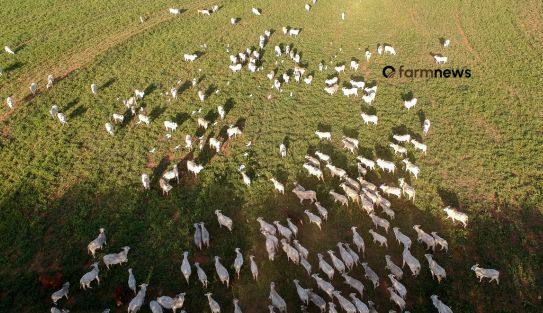
Modern farming isn’t just about tractors and soil anymore — it’s about data. AI systems are helping farmers analyse information from sensors, satellites, and drones to make precise decisions about when to plant, use of water, pesticides, fertilizers and harvest.
For instance, AI-powered drones can scan large fields in minutes, identifying areas that need more water or fertilizer. These insights allow farmers to fine-tune their operations, improving yields while reducing time, waste and costs.
Companies like John Deere are integrating AI into their smart tractors and farming equipment, allowing machines to make real-time decisions in the field. ClimateAI and Ceres Imaging use satellite and drone data to offer insights on soil health and crop performance, helping farmers improve productivity while saving resources.
2. Early Detection of Crop Diseases
Pests and diseases are among the biggest threats to global food security. AI in agriculture is now giving farmers a powerful new weapon against them. Using computer vision, AI can analyse images of crops and detect early signs of infection or nutrient deficiency long before the human eye can spot them.
This early warning system means farmers can act quickly — applying treatments only where needed and minimizing damage. It’s a win for both productivity and the environment.
For example, Plantix, a Germany-based app, lets farmers upload photos of their crops to instantly diagnose over 400 plant diseases and pests. Similarly, Taranis, an Israeli agri-tech company, uses AI-powered drone imagery to spot microscopic issues in fields, providing early alerts that can prevent large-scale losses.
3. Predicting the Future of Farming
With unpredictable weather patterns and shifting market demands, farming is no longer just about reacting — it’s about forecasting. AI-driven predictive models can analyse historical data, weather forecasts, and market trends to help farmers plan ahead.
These systems can suggest which crops are most likely to thrive in a given season or region, reducing risk and improving profitability. Governments and policymakers are also using AI predictions to manage food supply chains and prevent shortages.
IBM’s Watson Decision Platform for Agriculture helps farmers make data-driven choices by integrating satellite data, IoT sensors, and market insights into one dashboard. Meanwhile, startups like aWhere and CropIn use machine learning to generate localized forecasts and yield predictions that help both farmers and governments plan ahead.
4. Robots in the Fields
From self-driving tractors to autonomous harvesters, AI is powering a new generation of smart agricultural machinery. These machines can plant seeds, remove weeds, and harvest crops with remarkable precision — often working 24/7 without fatigue.
AI robots are even sorting fruits and vegetables by size and quality, ensuring that only the best produce reaches the market. This automation is helping farmers tackle labour shortages and improve efficiency across the industry.
Blue River Technology, a subsidiary of John Deere, has developed AI-powered “See & Spray” machines that identify and target individual weeds with precision herbicide applications — reducing chemical use by up to 90%. Agrobot and Naïo Technologies are deploying robots capable of harvesting fruit and vegetables with human-like precision, working around the clock to maximize productivity.
5. Greener, More Sustainable Agriculture
Sustainability is at the heart of AI’s role in agriculture. By using data to optimize water, fertilizer, and pesticide use, AI in agriculture helps farmers reduce environmental impact while maintaining high yields.
Some AI systems even simulate different climate conditions, allowing farmers to prepare for droughts, floods, and other extreme weather events. The result? A more resilient and eco-friendly farming ecosystem.
Prospera Technologies, for instance, uses AI to monitor and analyze crop data to reduce pesticide and water usage. Arable Labs offers smart sensors that help farmers track microclimate and soil conditions, ensuring better adaptation to changing weather and climate challenges.
6. Transforming the Food Supply Chain
AI’s influence doesn’t end in the field. It’s also revolutionizing how food moves from farms to consumers. Smart algorithms are improving logistics, predicting demand, and cutting down on food waste.
Retailers are using AI to monitor freshness, manage inventory, and track produce all the way from the farm to the table — boosting transparency and trust in the food supply chain.
IBM Food Trust, built on blockchain and AI, allows retailers and consumers to trace food products from farm to shelf — enhancing trust and accountability. Logistics firms like FourKites and OptimoRoute are using AI to optimize delivery routes, reducing delays and emissions.
The Bottom Line
AI in agriculture is no longer a futuristic concept — it’s already reshaping agriculture worldwide. By combining data, automation, and machine learning, AI is helping farmers grow more food with fewer resources, paving the way for a smarter, greener, and more sustainable future.
As technology continues to evolve, one thing is clear: the farms of tomorrow will be digital, data-driven, and powered by AI.
For Brazil’s soy farmers, the exchange rate is more than an abstract number on a financial chart. It determines the price of their crops, the cost of their supplies, and the health of their communities. Click here!
Do you also know that regenerative agriculture isn’t an expense — it’s a capital reallocation. Average payback happens between 5–8 years, depending on crop and reinvestment pace. Click here!
Click here to receive Farmnews studies via WhatsApp!